Beijing | July 10, 2026
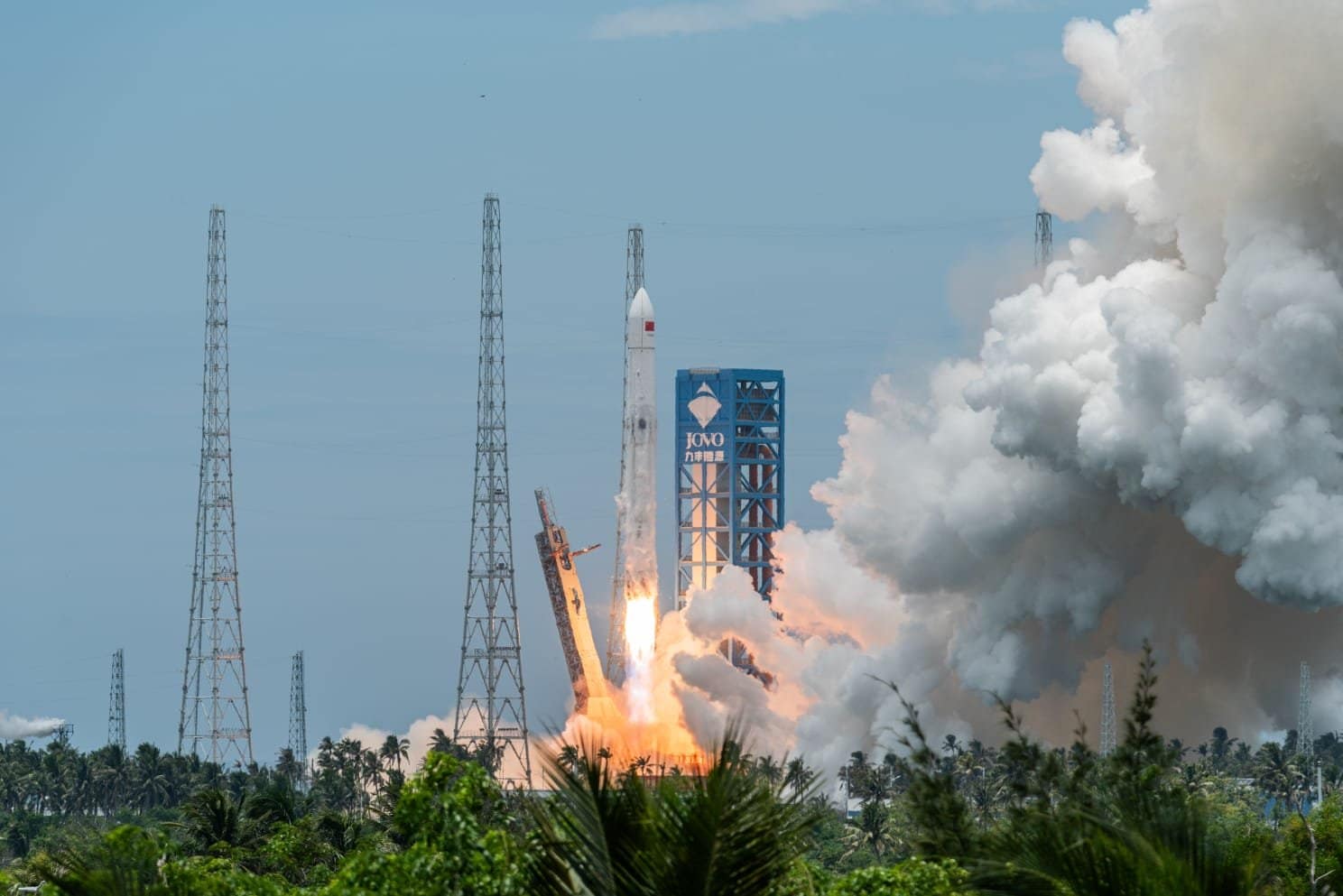
China has achieved a historic milestone in its rapidly advancing space program by successfully launching and recovering the first stage of its new Long March-10B reusable rocket. The achievement marks China’s first successful recovery of an orbital-class rocket booster and signals the country’s growing ambitions to become one of the world’s leading space powers.
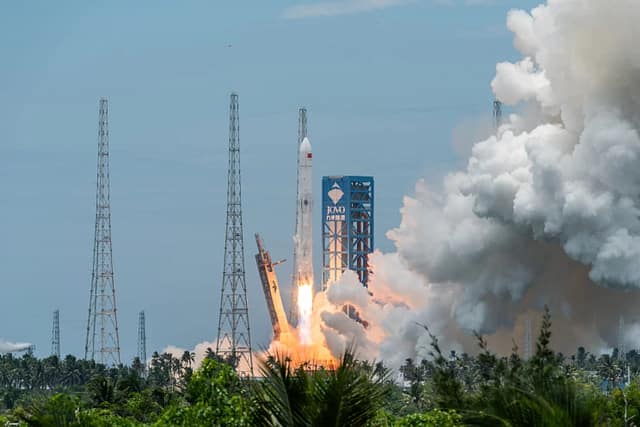
The mission was carried out from the Wenchang Space Launch Site on Hainan Island. Shortly after liftoff, the rocket’s first-stage booster separated from the upper stage and performed a controlled return to Earth. Instead of using traditional landing legs like SpaceX’s Falcon 9, China employed a completely different recovery method. The booster descended vertically and was captured by a giant net installed on a specially designed offshore recovery platform using four landing hooks, making it the world’s first successful net-based recovery of an orbital-class rocket booster.
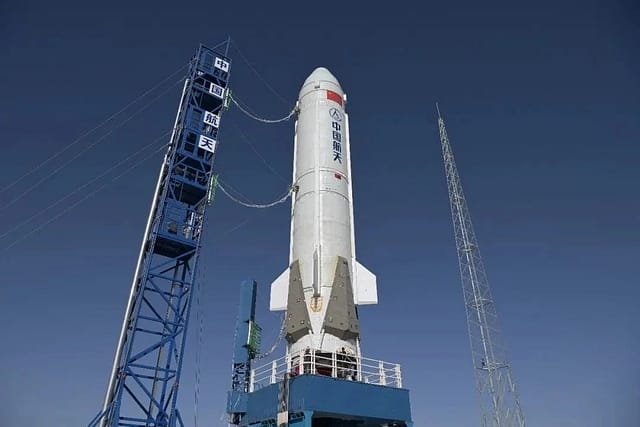
The Long March-10B has been developed by the China Academy of Launch Vehicle Technology (CALT) and is capable of carrying at least 16 metric tons into low-Earth orbit. Engineers believe the new recovery system reduces the rocket’s structural weight, increases payload capacity, and significantly lowers the cost of future launches because the same booster can be refurbished and flown again. Officials have already indicated that the recovered booster is expected to be reused for another mission before the end of this year.
Reusable rocket technology has become one of the biggest revolutions in modern space exploration. Instead of destroying expensive rocket stages after every mission, countries can recover, inspect, and relaunch them multiple times. This dramatically reduces launch costs, increases the frequency of space missions, and makes ambitious projects such as satellite constellations, lunar exploration, and deep-space missions far more affordable.
For years, the United States, led by SpaceX, has dominated reusable rocket technology. China’s latest achievement demonstrates that it is rapidly narrowing the technological gap. While SpaceX continues to lead with hundreds of successful Falcon 9 booster recoveries, China’s successful test proves that it is developing its own innovative approach rather than simply copying existing systems.
The successful test is also a major boost for China’s long-term space ambitions. The reusable Long March rocket family is expected to support large-scale satellite launches, expand China’s commercial space industry, and play a crucial role in the country’s plan to send astronauts to the Moon before 2030. With reusable launch systems becoming the future of space exploration, China is positioning itself as a serious competitor in the rapidly evolving global space race.
The achievement has attracted worldwide attention from space agencies, scientists, and industry experts. It not only showcases China’s engineering capabilities but also highlights the increasing competition among major space powers as nations invest heavily in next-generation launch technologies.
As the race to dominate space accelerates, China’s successful Long March-10B mission may be remembered as one of the defining moments that reshaped the future of global space exploration.


About The Author