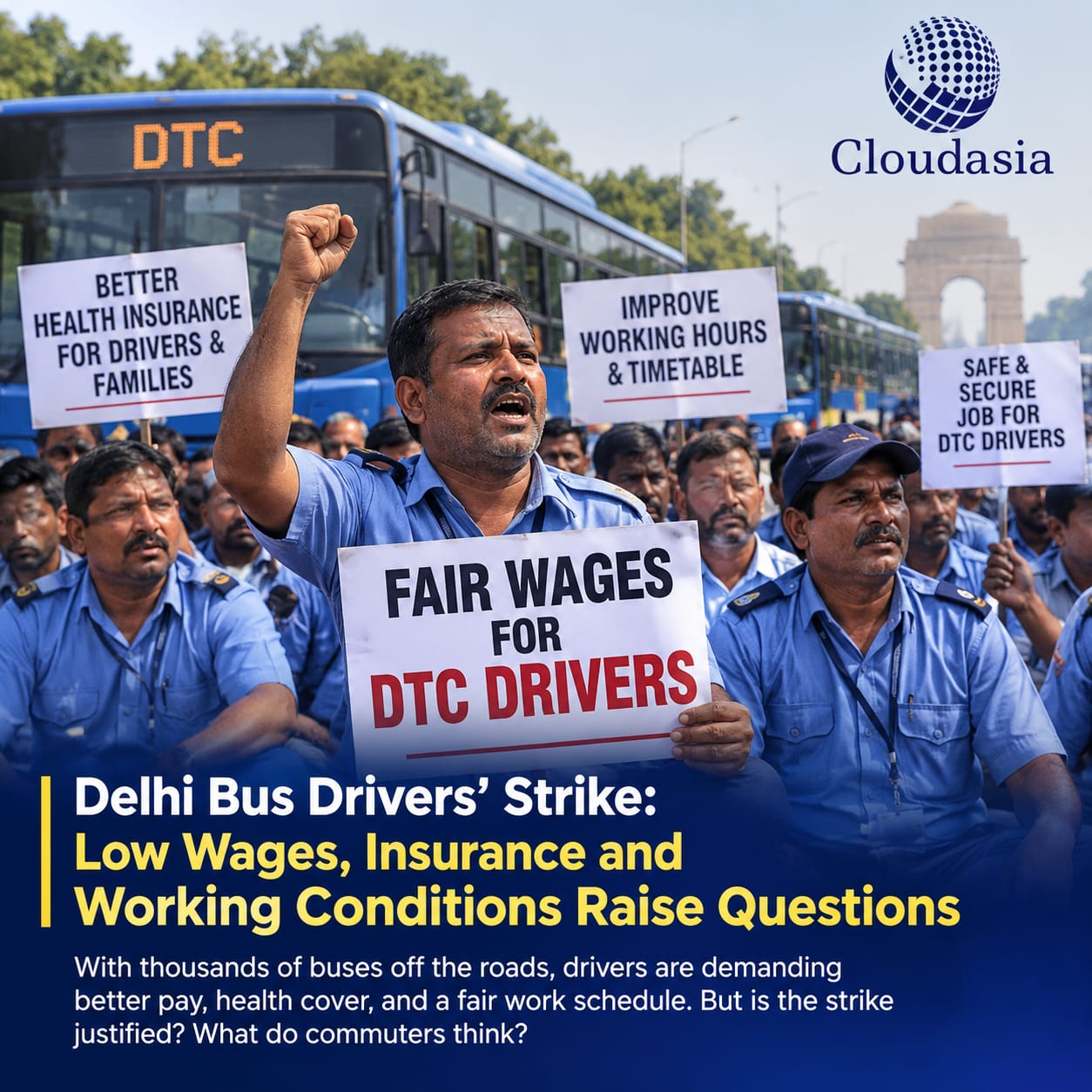

New Delhi: Delhi’s public bus services continue to face disruption as contractual DTC drivers remain on strike, demanding higher wages and improved working conditions. The strike, which began earlier this week, has left thousands of buses off the roads and commuters searching for alternative transport.
According to reports, drivers currently earn around ₹862 per day, while their union is demanding a minimum daily wage of ₹2,000, along with an annual bonus, payment for government holidays, leave and social-security benefits.
What are the drivers demanding?
The drivers’ demands extend beyond salary. They are seeking:
- Higher wages that better reflect present-day household expenses.
- Medical and health insurance for drivers and their families.
- Accident and social-security protection, considering the risks involved in driving buses in heavy Delhi traffic.
- Better duty schedules and realistic route timings, particularly given traffic congestion and long working hours.
- Paid leave and holiday benefits.
- Annual bonus and other employment benefits.
- Better compensation for additional work and kilometres driven.
Drivers interviewed by The Indian Express described difficulties managing household expenses, education costs, commuting expenses and loan repayments on their current earnings. One driver said he could not save even ₹300 a month.
Government and union versions differ
Delhi Transport Minister Pankaj Singh has said that several demands, including medical facilities, leave and other service-related benefits, have been accepted, while the wage increase is still being considered after consultation with the Labour Department. The drivers’ union, however, has disputed this account and said its demands have not been resolved.
The disagreement has therefore moved beyond the question of salary to a larger issue: what kind of working conditions should be provided to people responsible for operating an essential public transport service?
But what about commuters?
The strike is also creating difficulties for ordinary Delhi residents. With large numbers of buses remaining off the roads, commuters are facing longer waits and are increasingly dependent on the Metro, autos, e-rickshaws and other alternatives.
For many passengers, particularly daily wage workers, students and people travelling long distances, disruption to affordable bus services can itself create an additional financial burden.
CloudAsia Asks: Where Should the Balance Be?
The drivers are asking for wages and working conditions that can provide a dignified livelihood. At the same time, commuters depend on buses as an affordable and essential public service.
Should drivers continue working under conditions they consider financially and professionally difficult?
Should the government and contractors ensure stronger health, accident and life insurance protection for drivers?
Should duty schedules and route timings be redesigned to account for Delhi’s traffic conditions?
And when workers go on strike over wages and working conditions, how should their legitimate demands be balanced against the inconvenience and financial burden placed on commuters?
The Delhi bus strike raises a larger question about public transport: Can a city expect reliable and safe bus services without also ensuring sustainable working conditions for the people operating them?
CloudAsia invites Delhi residents, commuters, drivers and transport experts to share their views: What would be a fair solution to the current dispute?
About The Author