Chandigarh | July 11, 2026
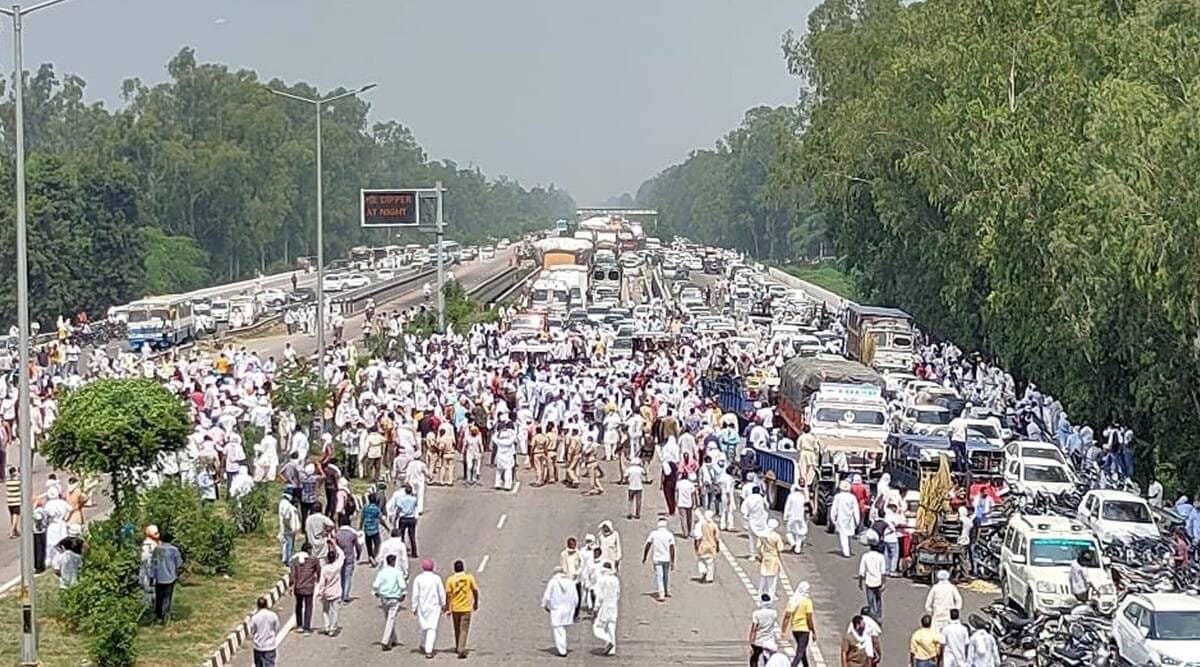
Thousands of farmers from Punjab gathered in Chandigarh on Friday, triggering one of the city’s biggest traffic disruptions in recent months. The large-scale protest, organised by the Sanyukt Kisan Morcha (SKM) and supported by other farmer unions, saw protesters arriving in buses, tractor-trolleys, and private vehicles, causing severe congestion across several major roads and intersections.
The demonstration began at the Dussehra Ground in Sector 34, where thousands of farmers assembled before marching towards Matka Chowk. Anticipating large crowds, the Chandigarh administration had issued traffic advisories and deployed heavy police personnel across key locations. Despite these preparations, long queues of vehicles were reported throughout the city as commuters struggled to navigate blocked and diverted routes.
According to farmer leaders, the protest was organised to oppose the proposed India–US trade agreement, which they fear could expose Indian agriculture to cheaper imports and adversely affect the livelihoods of domestic farmers. Protesters also raised strong objections to the Punjab government’s revised land pooling scheme, arguing that it could undermine farmers’ land rights and interests.
The rally remained largely peaceful, with farmers carrying banners and raising slogans demanding greater protection for the agricultural sector. Security personnel closely monitored the march, while traffic police worked throughout the day to divert vehicles and minimize inconvenience to residents. However, commuters across Chandigarh experienced hours of delays as major roads remained heavily congested.
The protest highlights the continued concerns among farmer organisations over agricultural policies and international trade negotiations. Farmer unions have warned that any agreement perceived as harmful to Indian agriculture will face strong opposition, and they have indicated that further demonstrations may be organised if their demands are not addressed.
While the administration managed to maintain law and order, the day’s events underscored how large-scale public demonstrations can significantly affect urban life. The protest not only disrupted daily commuting but also reignited the national conversation around agricultural reforms, trade policy, and the future of Indian farmers.
As discussions between farmer organisations and the authorities continue, all eyes will be on whether the concerns raised during the Chandigarh protest lead to policy changes or further nationwide demonstrations in the coming weeks.


About The Author