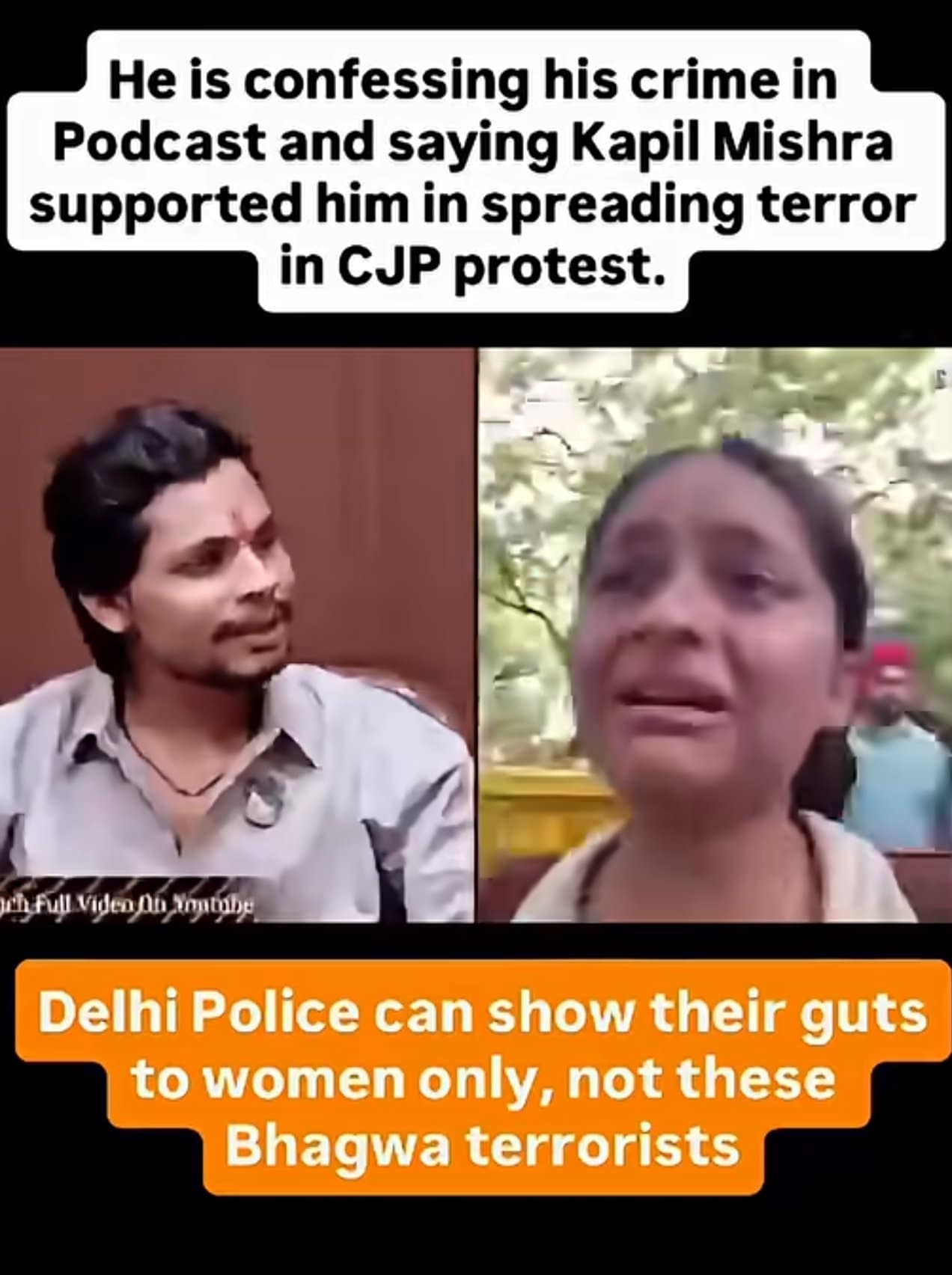

New Delhi: A video circulating widely on social media has triggered serious questions after a young man appearing in an interview allegedly speaks about an incident involving an attack on a girl’s father.
In the video, the man appears to discuss the incident and makes statements that, according to the accompanying social-media post, amount to an admission of involvement. The post was shared by lawyer Ratna Singh (@whattalawyer), who urged the Delhi Police to take suo motu action, arguing that the statements visible in the viral clip warrant investigation.
The video also contains references to other individuals during the conversation. However, their identities and the exact statements made could not be independently verified from the available clip, and therefore those names should not be treated as established facts without confirmation from police records or other reliable sources.
Serious allegation, serious questions
The central issue is not social-media outrage—it is whether a person appearing to acknowledge involvement in a violent incident has been properly identified, questioned and investigated by law-enforcement authorities.
If the allegations are substantiated and the victim’s father suffered serious injuries, the matter deserves a transparent investigation under the applicable provisions of law. A viral interview cannot itself establish guilt; that determination must come through evidence and due legal process.
At the same time, the circulation of such a video raises an important question for the public: when potentially incriminating statements are made openly and reach millions of people, what action should law-enforcement agencies take?
What is Delhi Police doing?
The demand for suo motu action effectively asks the police to examine the material without waiting solely for another social-media campaign or public pressure.
Delhi Police should, if the video falls within its jurisdiction, establish:
Who is the person speaking in the video?
What incident is he referring to?
Who was allegedly attacked?
What injuries were suffered by the victim?
Are there existing FIRs or complaints connected to the incident?
Who are the other people named or referred to in the conversation?
Does the video contain an authentic admission, or has it been edited or taken out of context?
These are questions for investigators—not social media users—to answer.
A larger question for India
The episode also highlights a broader concern about public confidence in the criminal-justice system. Citizens expect the same standard of law enforcement regardless of the accused person’s influence, connections, political association or social standing.
Calling the police “cowardly” may generate attention, but the stronger demand is simpler: investigate the allegation, verify the evidence, protect the victim and follow the law.
If a crime has been committed, the accused should face the legal process. If the viral claim is misleading or the video is being presented without context, that too should be established officially.
India does not need justice by social media. It needs a justice system that is visible, impartial and willing to act when credible evidence demands investigation.
Editorial note: This report is based on the uploaded viral video and the social-media post visible in it. The allegations and any apparent admission have not been independently verified here. No person should be presumed guilty solely on the basis of a viral video.
About The Author