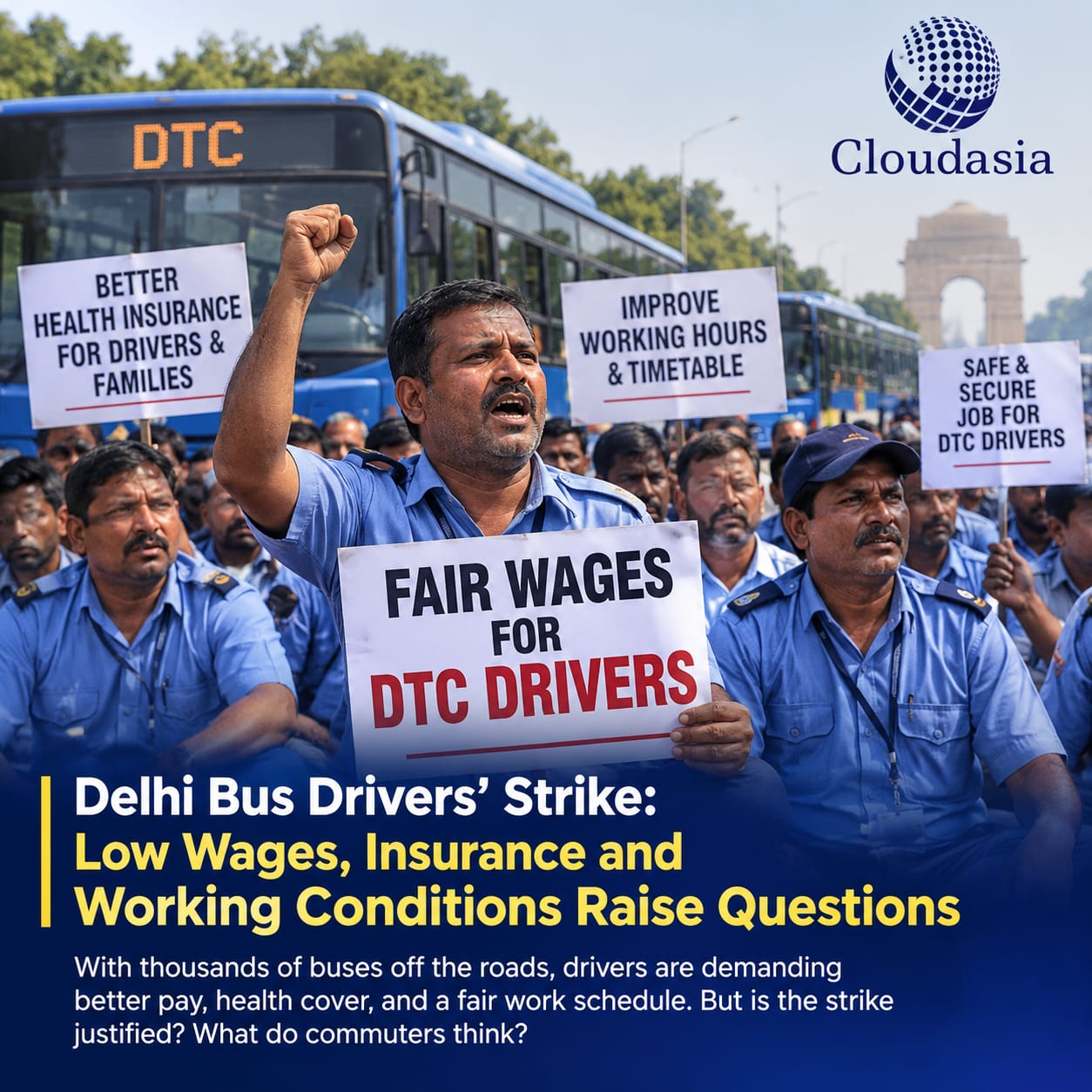
Women’s safety, inflation, jobs, salaries, healthcare, education, infrastructure and corruption—not political headlines—should define India’s governance agenda

India’s political conversation is often dominated by Parliament disruptions, political accusations, elections and ideological battles. But outside the political arena, millions of ordinary Indians are asking a different set of questions:
Can my family live safely? Can I afford basic necessities? Is my salary keeping pace with inflation? Can my children get a good education? Can I access a clean and affordable hospital? And where is the money collected from taxpayers actually going?
These are not opposition questions or government questions. They are citizen questions.
India’s next phase of development must therefore move beyond headline-making announcements and focus on measurable improvements in everyday life.
1. Women’s Safety Must Become Non-Negotiable
Few issues are more important than the safety of women and children.
India needs a justice system where serious sexual offences are investigated quickly and prosecuted effectively. Victims should not have to wait years for justice.
For the most heinous and aggravated offences, existing law already permits the death penalty in certain circumstances. The priority should be certainty and speed of punishment, alongside life imprisonment and other severe penalties where appropriate.
Fast-track courts, better forensic infrastructure, professional investigation, victim support and accountability for officials handling cases should become priorities.
The message must be clear: sexual violence will not be tolerated, and justice will not be delayed indefinitely.
2. Inflation: The Real Test Is the Household Budget
Headline economic indicators do not always reflect what families experience at the kitchen table.
The cost of LPG, cooking oil, sugar, food, electricity, transportation, education and healthcare directly determines a household’s financial pressure.
A family does not live on GDP statistics. It lives on its monthly salary.
The government should publish an easy-to-understand monthly Essential Household Cost Index, tracking the cost of a basic family basket across states and major cities.
Citizens deserve to know why prices rise, where the increase occurs and what measures are being taken to control it.
3. ₹13,000–₹15,000 Salary: How Can a Family Survive?
For a lower-middle-class or low-income household earning around ₹13,000–₹15,000 per month, basic expenses can consume almost the entire income.
Rent. Food. LPG. Electricity. Transport. School expenses. Medical emergencies. Mobile and internet bills.
There is often little or nothing left for savings.
India therefore needs not just more jobs, but better-paying jobs.
Minimum wages must be enforced, productivity must increase, MSMEs must receive support to create formal employment, and workers must have opportunities to develop higher-value skills.
Economic growth should ultimately translate into income growth.
4. Per-Capita Income Must Become a People-Centred Measure
GDP tells us how large the economy is. Per-capita income tells us more about the average economic capacity of citizens—but even that does not tell the entire story.
A stronger measure of development should combine income with affordability, healthcare, education, housing, sanitation, transportation and quality of life.
The question should not simply be:
“How fast is India growing?”
It should also be:
“How much better is the average Indian living?”
5. Ethanol, Sugar, Cooking Oil and Essential Commodities Need Transparency
Policies surrounding ethanol, sugar, agriculture and fuel can affect farmers, manufacturers and consumers.
But ordinary consumers should not be left guessing about price movements.
A public dashboard could show:
Production → procurement → processing → taxes → wholesale price → retail price.
Such transparency would help identify where costs are increasing and whether reductions in wholesale or input costs are reaching consumers.
The same principle should apply to cooking oil and other essential commodities.
6. Infrastructure: Build Better, Not Just Bigger
India needs world-class roads, railways, airports, metros, drainage, schools and hospitals.
But infrastructure development should come with financial and quality accountability.
Every major public project should disclose its:
- Original budget
- Revised budget
- Amount spent
- Contractor
- Completion deadline
- Current progress
- Cost overruns
- Reasons for delays
- Quality-audit findings
- Maintenance costs
If a ₹1,000-crore project becomes a ₹1,500-crore project, citizens should be able to see why.
Public money should never disappear into complicated paperwork that ordinary citizens cannot understand.
7. Every Government Should Publish a Monthly Report Card
Elections should not be the only time governments face accountability.
Imagine if every ministry and department published a simple monthly report:
What did we promise?
What did we complete?
How much did we spend?
What was delayed—and why?
What will we deliver next month?
Such a system would make governance measurable.
Citizens should be able to track promises in the same way investors track the performance of a company.
8. Government Must Listen to Citizens
Governments need stronger mechanisms to understand problems at the ground level.
Citizens should have simple ways to report problems involving:
Roads, water, electricity, garbage, sanitation, public transport, schools, hospitals and local corruption.
But complaints should not simply disappear into an online portal.
A public dashboard should show:
Complaints received → complaints resolved → pending complaints → average resolution time.
That would create genuine administrative accountability.
9. Education: A School Building Is Not Enough
India needs to shift from measuring education by the number of schools built to measuring what students actually learn.
Government schools should be assessed on teacher availability, attendance, learning outcomes, toilets, drinking water, hygiene, safety, technology and extracurricular opportunities.
Every child deserves access to quality education regardless of family income.
10. Healthcare Must Be Clean, Affordable and Accessible
A hospital should not become another source of anxiety for a struggling family.
Public hospitals need adequate doctors and nurses, essential medicines, diagnostics, emergency services, clean toilets and proper sanitation.
Healthcare quality should be measured not merely by the number of hospitals constructed, but by how patients are treated inside them.
11. Taxes Must Deliver Visible Public Value
International comparisons of taxation should be made carefully because tax structures differ between countries.
But the larger question is legitimate:
What does a citizen receive in return for the taxes and charges they pay?
If citizens contribute to the economy, they should see that contribution reflected in reliable infrastructure, public transport, healthcare, education, sanitation and efficient government services.
The objective should be better value for every rupee paid.
12. Corruption: The Problem Behind Many Problems
Corruption can make infrastructure more expensive, slow down projects, distort procurement and weaken public services.
The answer requires transparency, digital procurement, independent audits, stronger whistle-blower protection, public disclosure of major contracts and swift action when wrongdoing is proven.
The principle should be straightforward:
Every rupee of public money belongs to the public.
The India Citizens Should Demand
India does not need fewer political debates. It needs more meaningful political priorities.
The national conversation should focus on:
Safety.
Affordable living.
Better salaries.
Employment.
Quality education.
Clean healthcare.
Reliable infrastructure.
Transparent government spending.
Lower corruption.
Better quality of life.
Political parties may disagree on ideology, economics and strategy. That is part of democracy.
But ordinary citizens should be able to demand one common standard from everyone in power:
What did you deliver this month—and what will you deliver next month?
India’s development story will ultimately not be judged only by stock-market records, GDP growth or the number of projects announced.
It will be judged by the ordinary family that can finally afford a decent life, the woman who feels safe walking home, the student receiving quality education, the patient entering a clean hospital, the worker whose salary is rising and the taxpayer who can see where their money is being spent.
That is the India citizens want—and the India governance should deliver.
About The Author