
Traffic through one of the world’s most critical energy routes has all but stopped, but markets are behaving as if nothing has changed, a gap experts say may not last
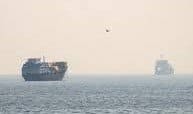
Shipping through the Strait of Hormuz has nearly ground to a halt this week as fighting between the United States and Iran resumed, yet neither oil prices nor global stock markets appear to reflect the scale of the disruption. The gap between what’s happening on the water and how markets are reacting is raising questions about whether calm is justified, or simply delayed.
A near-total shutdown in one of the world’s busiest energy routes
According to maritime data firm Lloyd’s List Intelligence, no large vessel has crossed the strait via the US-coordinated route while broadcasting its location since Tuesday, with traceable crossings on the Oman-hugging lane “effectively grinding to a halt.” At least two ships are believed to have crossed with their tracking systems switched off.
Maritime intelligence platform Windward reported only five vessels crossing the strait on Wednesday and early Thursday, compared with 45 transits on Monday. Before the war began in late February, roughly 130 vessels passed through the strait daily, according to the report.
The UK Maritime Trade Operations agency said in its latest threat assessment that the drop in traffic reflects a “cautious posture” among shipping lines amid an “elevated threat environment.” John Bradford, executive director of the Yokosuka Council on Asia Pacific Studies, said Iran’s ability to strike vessels across the Persian Gulf and Strait of Hormuz exposes all regional shipping to risk, and warned that if the crisis drags on, shipping companies may begin permanently favouring other routes and ports.
Oil prices, so far, aren’t showing it
Despite the shutdown in traffic, Brent crude stood at $76.58 per barrel as of Friday morning, practically unchanged from Thursday and down about 2 percent from Wednesday. Prices have only risen a little over $4 a barrel compared to last week, after briefly returning to pre-war levels following a memorandum of understanding signed by Washington and Tehran last month to end the conflict.
Bart Melek, global head of commodity strategy at TD Securities, said the relative stability reflects market confidence that the situation will eventually settle, but warned that hostilities are likely to add upward pressure as oil inventories shrink in the coming weeks. He projected Brent could move $10 to $15 higher heading into the summer.
Not all fuel markets are staying calm, however. June Goh, senior oil market analyst at Sparta Commodities, said refined products like diesel are under far greater strain than crude, driven by lost supply from Middle East refineries and continued Ukrainian drone strikes on Russian refineries, pushing diesel prices well beyond seasonal norms.
Asian markets rally regardless
The disconnect extends to equity markets as well. Asian stocks opened higher on Friday, following an overnight 0.8 percent rise in the US S&P 500. Tokyo’s Nikkei 225 was up 1.8 percent by midday, Seoul’s Kospi surged more than 5 percent, and Hong Kong’s Hang Seng Index rose 1.9 percent, even as fighting expanded elsewhere in the region.
Iran reported unexplained explosions in the south of the country on Thursday, following US strikes on Iranian targets earlier in the week. Iranian officials said Tehran’s forces struck US military assets in Bahrain, Kuwait, Qatar, Jordan, and Iraq in retaliation, though a US official told Al Jazeera that American forces were not behind the latest explosions inside Iran.
For now, oil prices and stock markets are moving as though the conflict is contained, even as the physical flow of ships through one of the world’s most important chokepoints has nearly stopped. Whether that confidence holds, or whether markets are simply lagging behind a crisis still unfolding, may become clear only as oil inventories continue to shrink in the weeks ahead.
About The Author