
Author Adam Johnson criticises Waverley council saying ‘reality is often upsetting’ while Palestinian group says libraries should hold ‘challenging’ books
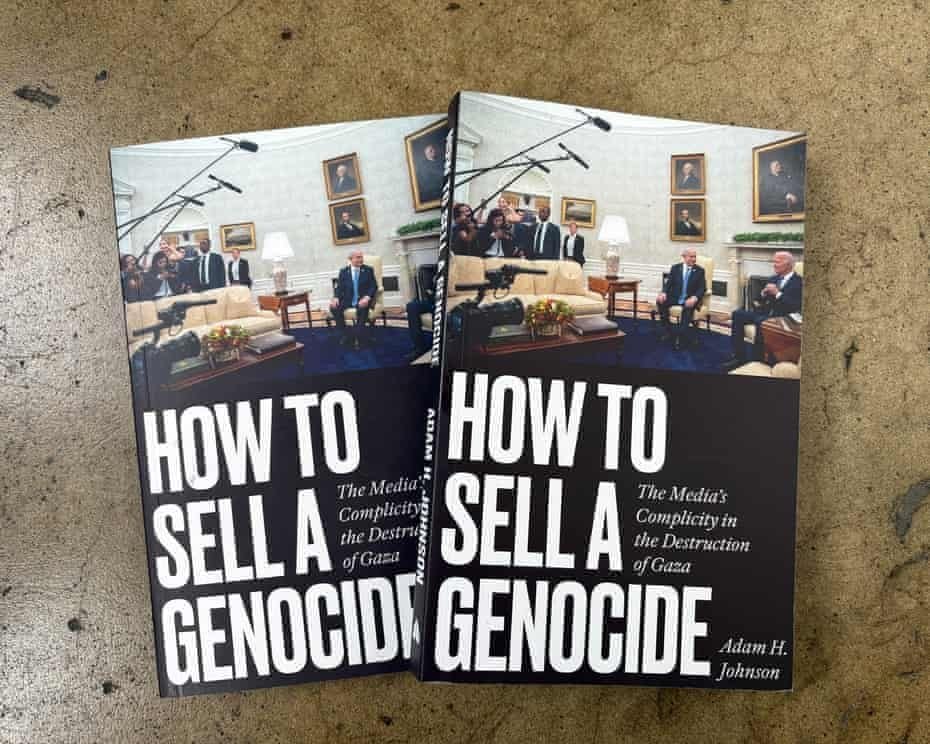
A Sydney library has removed a book critical of Israel called How to Sell a Genocide, following a complaint reportedly from a survivor of the Bondi beach terror attack.
Waverley library at Bondi Junction is in the same council area as Bondi beach.
A Waverley council spokesperson said: “The book has been removed from library shelves for review, and council will further consider processes to ensure closer oversight of book selection.”
“Like most public libraries, Waverley council outsources its book curation, ordering and purchasing, meaning book selection is not undertaken by council officers.”
The Jewish news outlet JWire last week reported it had approached the council after a survivor of December’s antisemitic attack at Bondi, during which 15 people were killed, saw How to Sell a Genocide on the “new release / hot item” shelf and wrote on Facebook that the display was distressing for survivors and bereaved families.
Guardian Australia has been unable to locate the Facebook post.
How to Sell a Genocide critiques what it claims is the US media’s “complicity in the destruction of Gaza”.
The decision to remove the book was criticised by its author, Adam Johnson, who said calling Israel’s actions in Gaza a genocide was not “a fringe or radical position”.
“They seem to be objecting largely based on the title using the word ‘genocide’,” Johnson said.
“But ‘genocide’ is not my word, or my finding. The fact of genocide in Gaza is the overwhelming consensus of the human rights world, and it is a wholly mainstream opinion among those tasked with studying and determining such matters.
“That it makes some people upset is unfortunate, but reality is often upsetting. This particular reality is especially upsetting … to the parents of the over 20,000 children killed by Israel in Gaza since October 2023. Do Sydney officials plan on removing pro-Israel books from their libraries because it potentially upsets these community members?”
The Executive Council of Australian Jewry and the NSW Jewish Board of Deputies declined to comment.
Bart Shteinman, an executive member of the progressive Jewish Council of Australia, said the decision to remove the book for review was “deeply alarming”.
“Public libraries belong to all of us, and should host a range of views and topics, be they books about queer families or Israel’s widely-condemned war crimes,” he said.
Israel has repeatedly denied that it has committed genocide in Gaza.
The New South Wales government passed legislation earlier this year which amended the state’s Library Act to better protect the institutions from campaigns to ban books.
Shteinman said “if the council decides to remove this book permanently, both the mayor, Will Nemesh, and the special minister of state, John Graham, must explain how that decision is not in breach of the law”.
The president of the Australia Palestine Advocacy Network, Nasser Mashni, said it was a “library’s duty to provide its community access to a broad range of published works, including those that may challenge or discomfort”.
About The Author